Photo by Hannah Morgan on Unsplash
I used to think that UX was purely digital. When I started my own business, offering UX and conversion to small businesses, I designed a formal, three-tier product offering. It all involved digital content: websites, emails, social ads. There were audits, reports and workshops.
The problem was, I didn’t actually want to deliver it.
As I wrote the website copy I felt… meh.
I’ve been doing UX audits, reports and workshops for ten years while working for large organisations. Of course, I’d tailored my approach to fit smaller businesses, but the more time I spent on the website, the worse I felt.
My partner looked at my SaaS-style pricing page, pointed to the partnership tier and said,
“Wow, this is a lot.”
“Yes,” I replied, “but no one will buy it. I’m funnelling them towards the middle.”
“But what if someone does choose that? Do you want to do it?”
“Hell no.”
He looked at me.
That was the moment I started being honest with myself. I LOVE UX, but I hate writing reports, reading too much data and producing heaps of collateral.
How valuable honest feedback is to small business growth
I was working with my first test client at the time. They were friends who run an organic farm with an e-commerce website. They didn’t want those things either. For example, when I mentioned that I’d be updating the report to reflect something we had discovered, she said,
“Honestly, I read that report, it was brilliant to see, but I’m never going to look at it again.”
Normally, I wouldn’t redesign my entire offering based on one client’s feedback. But it chimed with what my gut had been telling me all along, so I took the risk. I rebuilt my offering around what I actually love: working face to face with people, solving problems together.
That helped me get my next client.
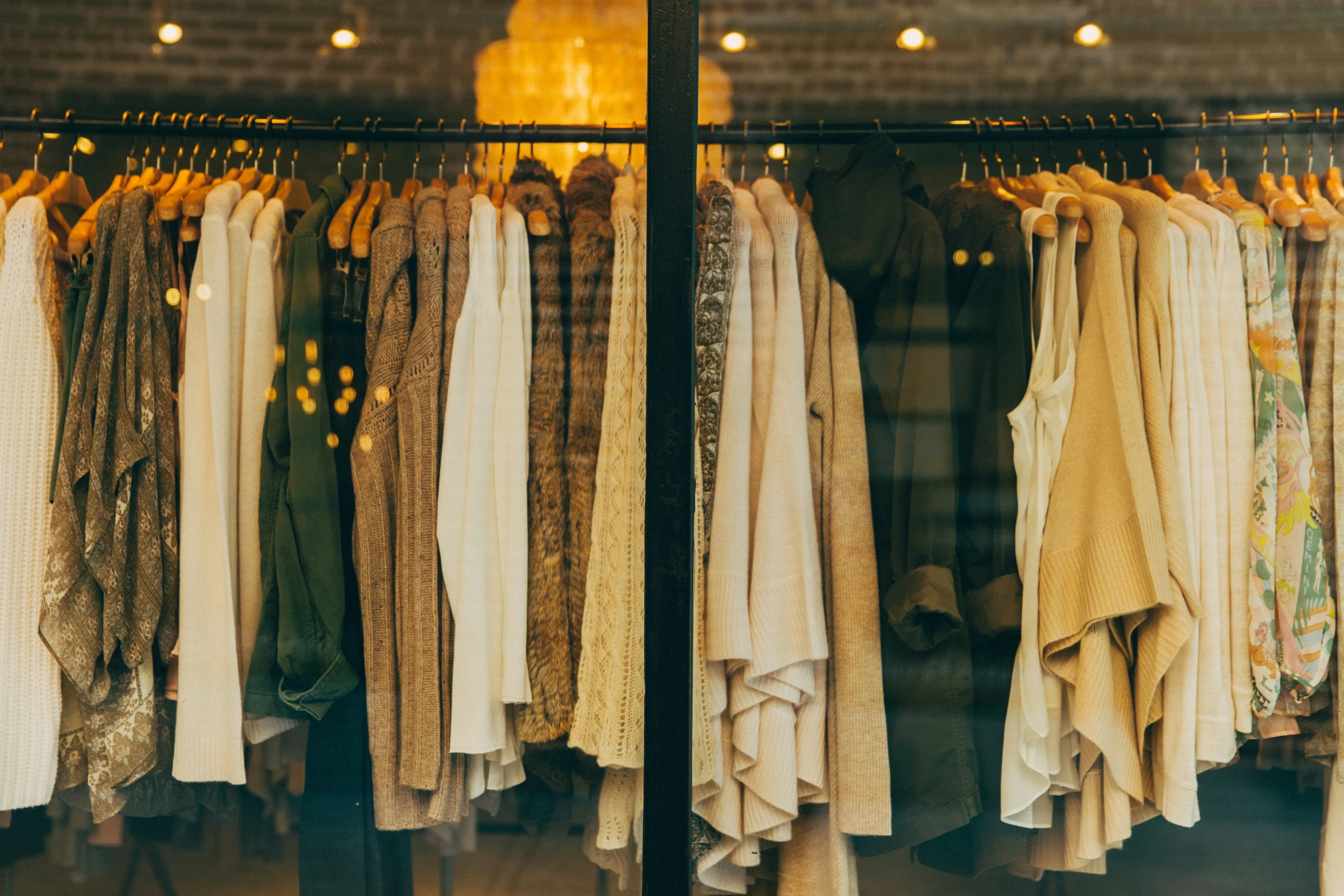
She owns a vintage clothing business. And she was about to teach me something the farmers hadn’t.
They’d helped me understand how I wanted to work. She showed me that UX doesn’t have to stop at the edge of a screen.
This client, she doesn’t know what UX means. Quite frankly, she doesn’t care. She doesn’t say conversion, she says sale. Mentioning Google Search Console makes her narrow her eyes and bite her thumbnail. Not because she isn’t sharp, she’s deeply intelligent, but because she’s a creative director running every part of her business, while raising children. She’s at capacity.
I’ve worked in the UX and product teams of numerous tech organisations. I slip easily into the language; it’s clear-cut to me. It’s the perfect tool for saying that a design feels heavy, that certain wording creates friction instead of flow, that users drop off or bounce or hover or click. But outside those teams and niches, it means very little.
It means even less to someone who works in a bricks-and-mortar store. So I asked myself: does it matter? Should a founder be expected to learn the disciplines that make an e-commerce site as profitable as her physical shop? On the surface, “yes it matters” and “no, she shouldn’t have to” look like a contradiction. They’re not. Let’s look closer.
UX means very little to small businesses who function in the physical world
Think builders, therapists, baristas. UX principles have little place in their day-to-day work in a physical environment. Until they need a website, and their needs change overnight. Usually a founder ends up taking on the website alongside running and growing the physical business. That’s too much for one person, but it’s become normal, and we’ve all just adjusted to it.
I think this is why I see so many brilliant people, with genuinely superb skills and products, stuck with clunky websites that do them no justice. It pains me. They usually assume the fix is a developer or a designer, which is expensive and often makes little difference to conversion if the person they hire isn’t UX-focussed.
So yes, it matters that founders of small businesses don’t know what a user journey is, or why their button copy is unclear. It matters to me, which is why I’m trying to figure out how to offer UX and conversion optimisation to small businesses in a way that serves them. But doing that hasn’t looked the way I expected.
Running a website is a full-time job for founders
This is true in large organisations, mostly true in medium-sized ones, and debatable in a business with one to five people, though it depends on the website. There’s the calling-card portfolio site for a gardener, the semi-static SaaS page that just needs a news update now and then, and there’s my client’s e-commerce site, which needs a steady stream of new product listings. Her pieces are high-end vintage, think Italian linen trousers and silk blouses, and each one needs to be laundered, measured, photographed, edited, and written up before it can go live.
We don’t know yet how many garments she needs to upload each week to turn a real profit from the site, but my guess is at least twenty. Could twenty pieces be shot, edited, and uploaded in a single day? I don’t know yet, and honestly it’s a moot question, because on paper she doesn’t have a day to spare, or the budget to outsource it. Yet. So we’re doing it on a shoestring: pulling in favours, using her shop and her garden as a makeshift studio.
This is the part that doesn’t sound like UX: organising shoots, uploading listings, angling a lamp to get the hero shot right. But it is UX. A bottleneck here, at the unglamorous input stage, is exactly what shows up later as a broken or empty user journey on the site. If the garments never make it online, there’s no journey to optimise.
This is how I’m doing UX for a small creative business. It bleeds from the screen into the real world, because the real world is where it actually starts.
Being there is the work
“This,” I said to my partner, “now this work I love.” Being face-to-face with her, visiting her shop, seeing her customers, holding the product, talking through the day-to-day problems, being a fresh pair of eyes – not just on her website, but on her offering, and on her. She’s been doing this long enough that she’s stopped seeing how powerful she is, how unique, how much potential the business actually has.
A lot of her user journeys start at an event, where she has a stand that people are drawn to, almost magnetically. Her stands are genuinely irresistible, and that’s the quality we want to carry through to the website (her social media already has it). People see her, see the clothes, engage with her, and want to be part of her world.
People buy on the spot, or they take a card. I need to understand these touchpoints in the physical world so that when someone lands on the site afterwards, the digital experience picks up logically from where the real one left off. Like any solid brand, the website has to sound like her, look like her, and carry products that match what people saw and felt at the event.
That’s why I need to be at the event, not just at the laptop. I want to understand her customer and how she actually talks to them. And I need to help her get the products onto the site, which sounds simple until you’re standing in her garden with a camera, trying to solve it. Right now it’s a puzzle, and the pieces are time and resource.
None of this looks like UX on paper. There’s no wireframe for a garden photoshoot, no heat mapping tool for a market stall. But maybe that’s the point.
This vintage shop has shown me that the businesses I most want to work have user journeys that flow beyond the screen. They start with the owner and the website is simply the next chapter. My job isn’t to teach small business owners the language of UX. It’s to translate what they already do brilliantly into a website that does it justice.
0 Comments